Design Ideas
Japandi Interiors: A Complete Guide
Where Japanese restraint meets Scandinavian warmth — how to create a calm, natural Japandi home that feels right in India.
In this article
Japandi blends two design traditions that share a love of simplicity: the quiet minimalism of Japan and the cosy functionality of Scandinavia. The result is calm without being cold, natural without being rustic. It also happens to suit Indian homes remarkably well, especially apartments where light and space are precious.
The core principles
- Less, but better: fewer objects, each chosen with care
- Natural materials: wood, linen, stone, paper and clay
- Low, grounded furniture with clean lines
- A muted palette with warm undertones
- Visible craftsmanship and imperfect, handmade details
Build a warm, muted palette
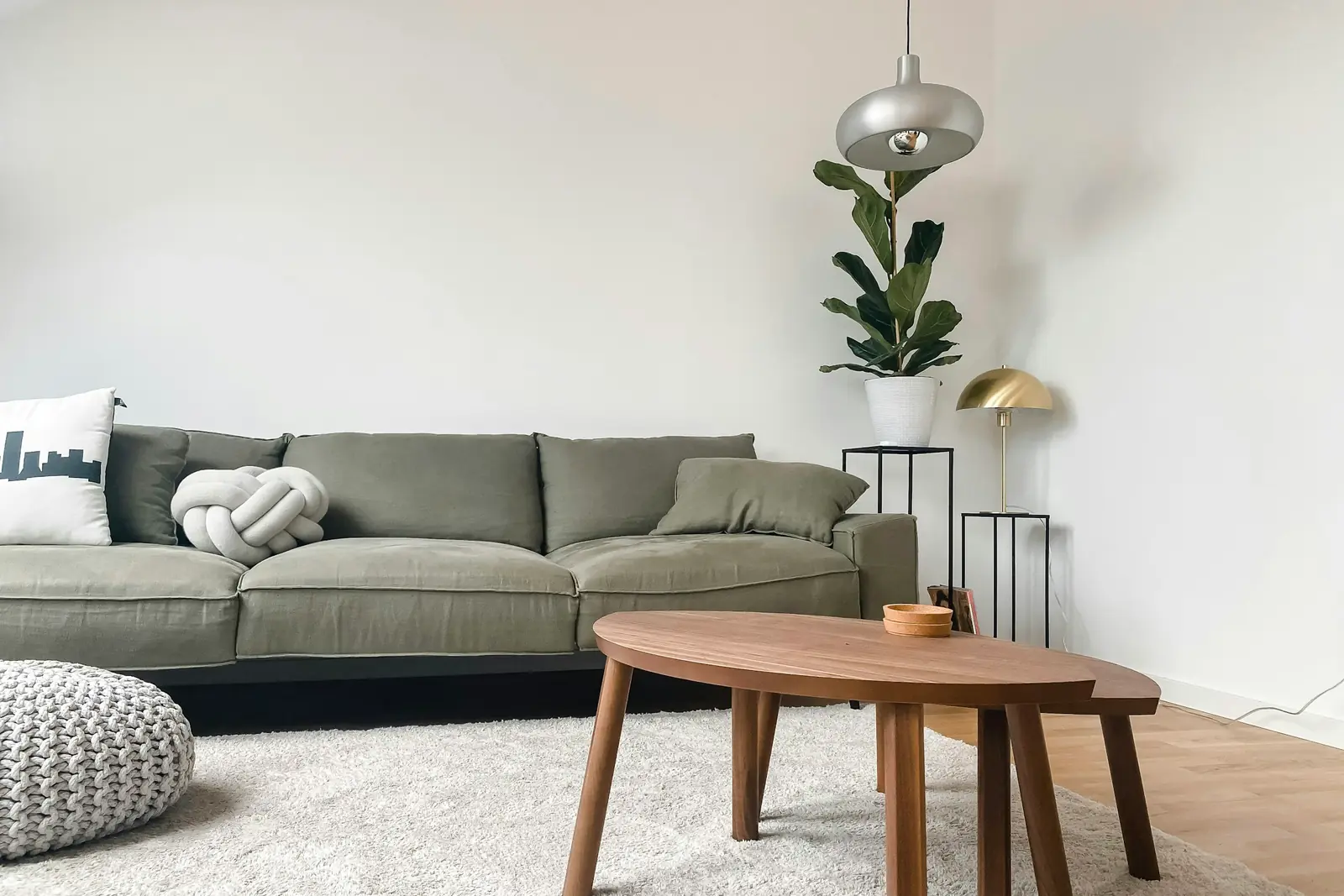
Start with warm whites, greige and sand on the walls. Add mid-tone woods such as oak or ash for lightness, then anchor the room with a few darker accents — walnut, charcoal or deep olive. Avoid bright, saturated colours; Japandi is about harmony, not contrast.
Choose low, honest furniture
Look for furniture that sits close to the ground: low sofas, platform beds and benches. Visible joinery, rounded edges and solid wood surfaces are typical. Every piece should be useful; decorative furniture that serves no purpose has no place in a Japandi room.
“Japandi is not about owning less for the sake of it. It is about owning things that deserve the space they take.”
Layer texture instead of pattern
With a quiet palette, texture does the work. Combine washed linen, nubby bouclé, woven cane and hand-thrown ceramics. A jute or wool rug grounds the seating area, while paper or rattan lamps diffuse light softly in the evening.
Making Japandi work in India
Indian homes often have strong sunlight, high humidity and a tradition of living close to the floor. Use these to your advantage. Floor cushions and low seating feel natural; teak and cane cope well with humidity; and sheer linen curtains soften bright light beautifully. Indian crafts fit the style perfectly — Khurja pottery, hand-loomed cottons and brass vessels all bring the handmade warmth Japandi celebrates.
Room by room
Living room
A low sofa in a neutral fabric, a solid wood coffee table, one sculptural lamp and a single large plant. Keep surfaces almost empty.
Bedroom
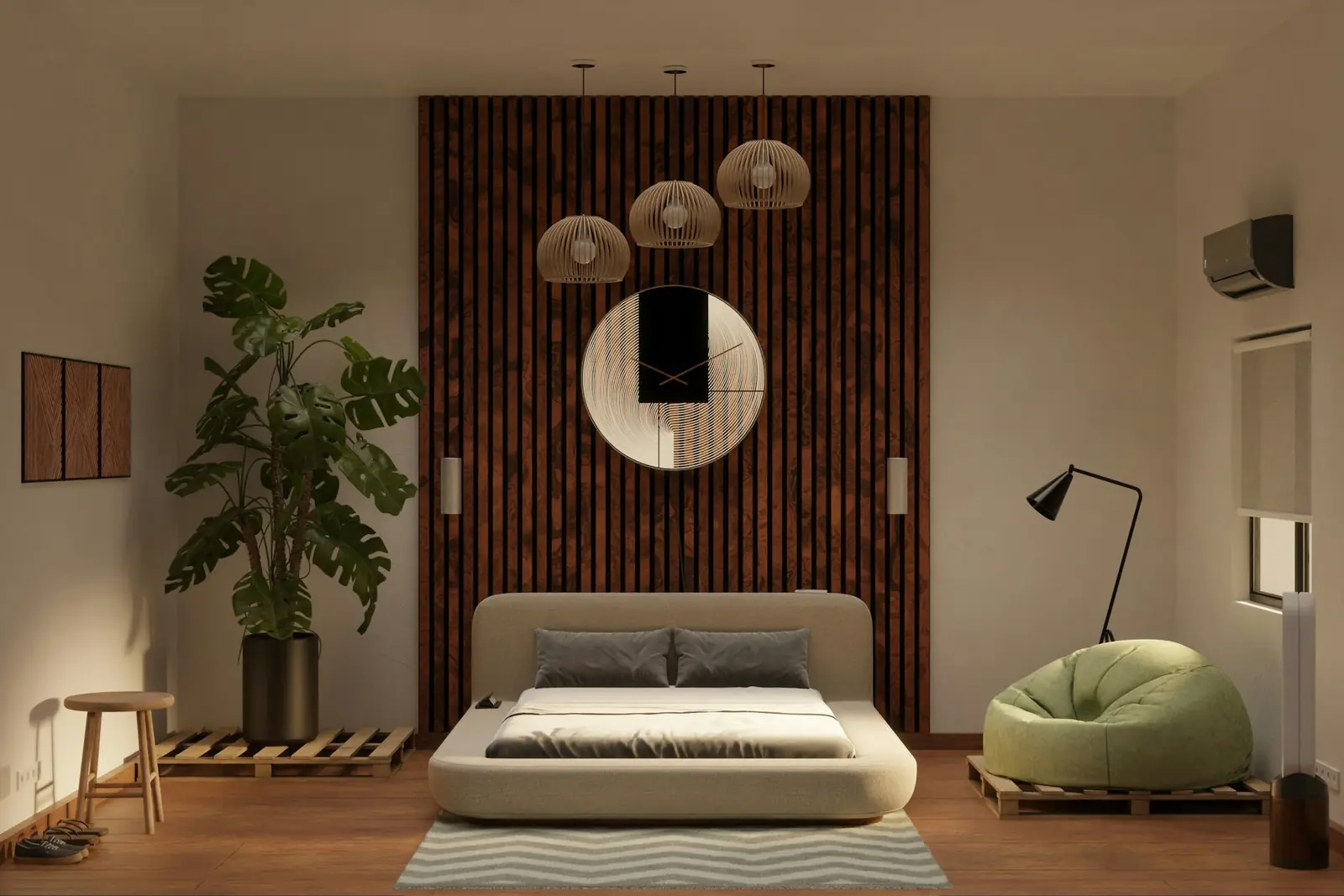
A platform bed in light wood, linen bedding in sand or stone and bedside tables with closed storage so the room stays uncluttered.
Dining
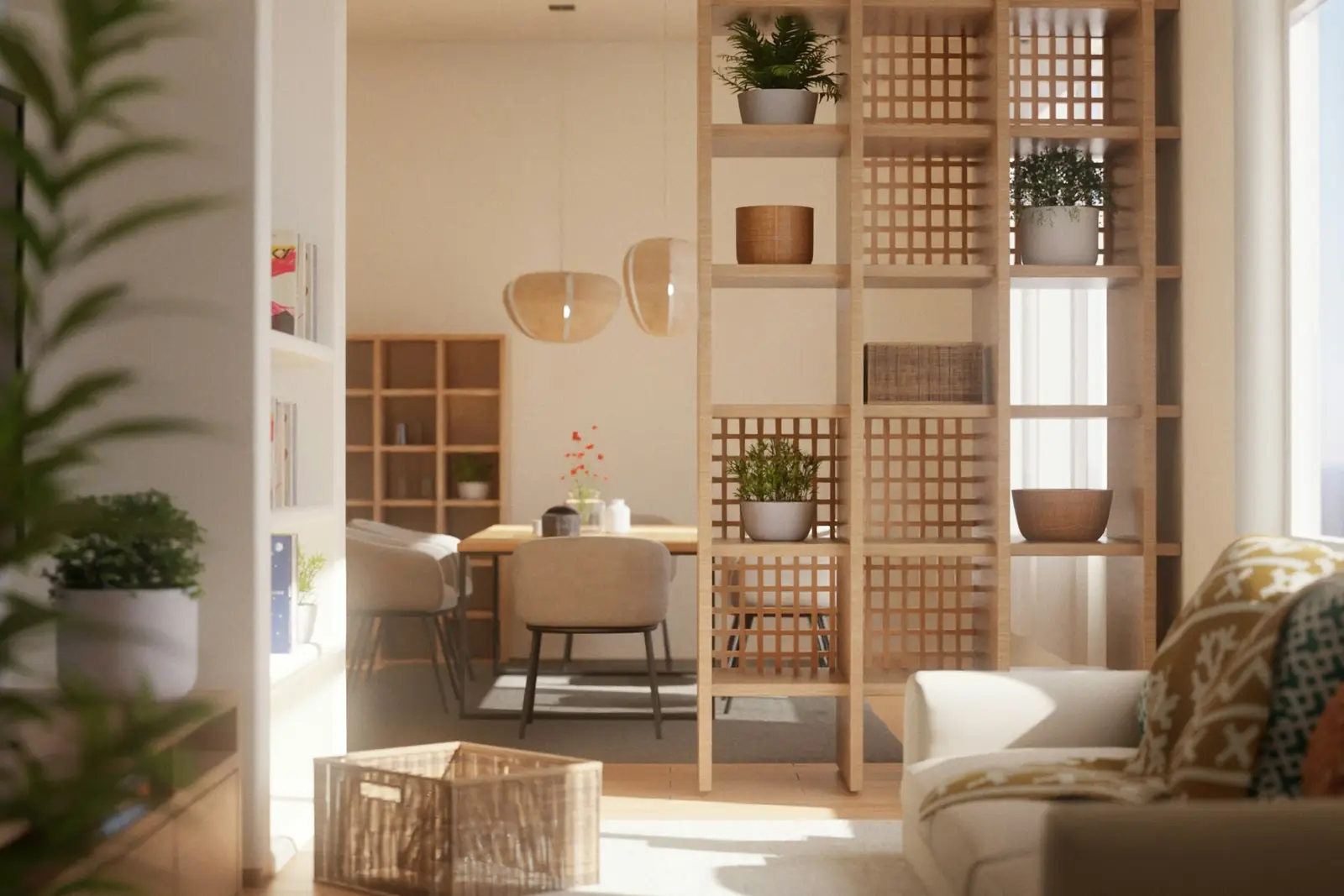
A simple solid-wood table, chairs with woven or wooden seats and a paper or wooden pendant hung low over the table.
Lighting the Japandi way
Light is half of the Japandi mood. During the day, let it in through sheer linen or paper-like blinds that soften harsh sun without blocking it. After dark, avoid a single bright ceiling light. Instead, layer low, warm sources: a paper or rattan pendant over the dining table, a floor lamp beside the sofa and a small table lamp in the bedroom. Keep bulbs at around 2700K so wood and textiles glow rather than look flat, and put the main lights on dimmers. The aim is a room that gently dims with the evening, the way traditional Japanese homes did with lanterns and screens.
Plants play a similar quiet role. One large sculptural plant, or a single branch in a ceramic vessel, brings life to a room far more effectively than many small pots.
Common mistakes to avoid
- Going too cold: add warm wood and soft textiles to avoid a sterile look
- Too many accessories: choose three objects, not thirty
- Ignoring lighting: use warm 2700K bulbs at several heights
- Buying a “look”: choose pieces you truly like, not a catalogue set
Japandi is ultimately a way of living: slower, more considered and more connected to the materials around you. Start with one room, edit what you already own and add natural pieces over time.