Buying Guides
How to Choose the Perfect Sofa for Indian Homes
Size, seat depth, frame, foam and fabric — a designer’s checklist for buying a sofa that survives monsoons, festivals and family life.
In this article
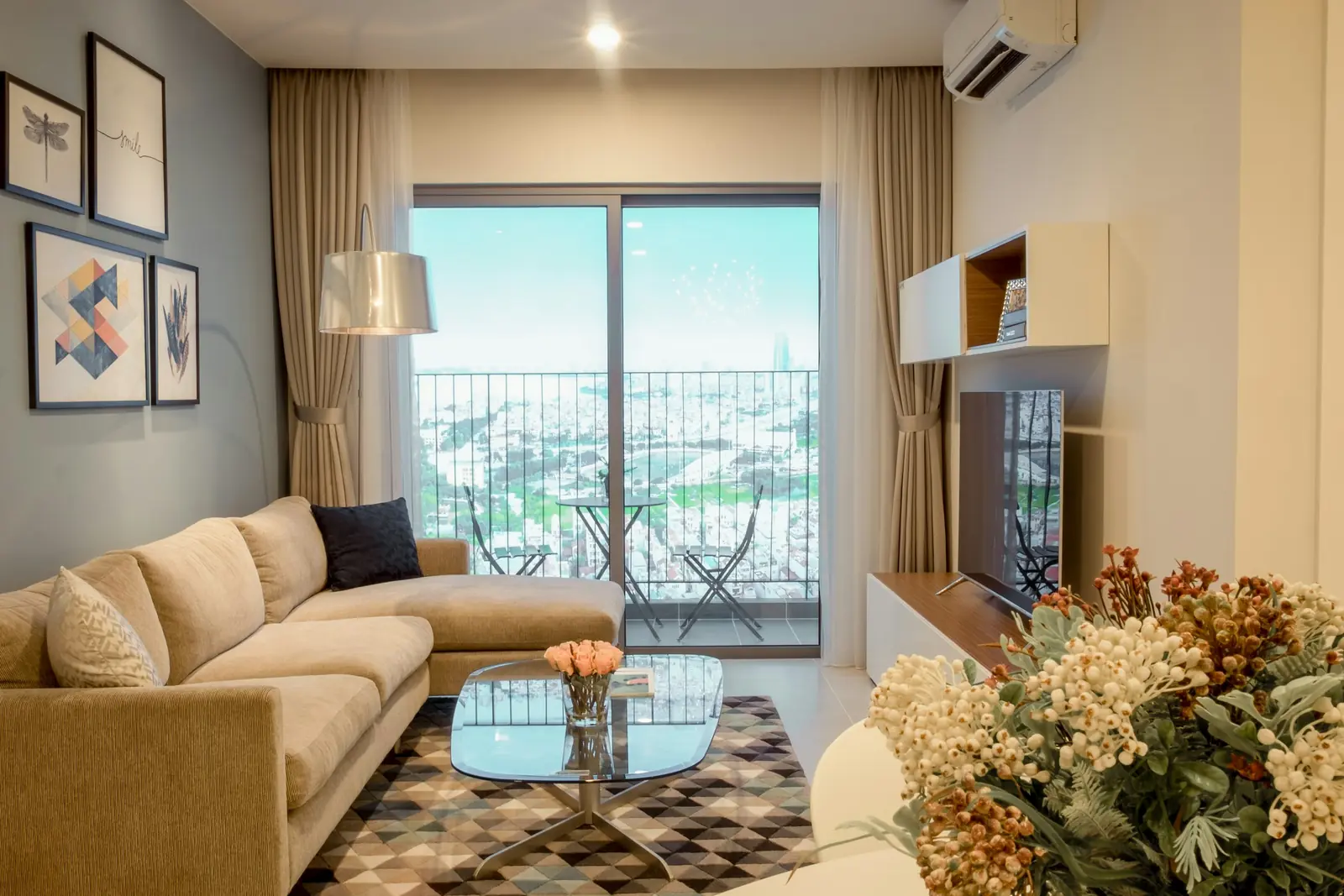
A sofa is the one piece of furniture that every member of an Indian household uses, often all at once. It hosts weekend naps, cricket matches, relatives who stay a little longer than planned and the occasional plate of pakoras. That is why a sofa deserves more thought than almost anything else you buy for your home. Here is the checklist our design team uses when we specify sofas for clients across the country.
Measure the room, not just the wall
Start with the floor plan. Measure the wall you want the sofa against, then mark out its footprint on the floor with masking tape. Leave at least 75 cm of clear walkway in front of the seat and 45 cm between the sofa and the coffee table, so knees and feet have room. In most Indian apartments a three-seater between 210 and 230 cm wide is the sweet spot. Anything larger tends to dominate the room unless you have a generous living area.
Do not forget the route in. Measure the main door, lift and any tight corners in the corridor. Many premium sofas, including ours, come with detachable legs or modular sections precisely because high-rise lifts are often smaller than the sofa itself.
Seat depth and height decide comfort
Seat depth is the single biggest factor in how a sofa feels. A depth of 55 to 58 cm suits upright sitting and shorter family members; 60 to 65 cm invites curling up and lounging. A seat height of about 42 to 45 cm works for most adults and makes it easy for elderly parents to stand up without effort. If your household spans generations, choose the middle ground and add cushions for those who like to sink in.
“If grandparents will use the sofa every day, a firm front edge and a seat height of 44 cm matter more than any fabric you choose.”
Look inside: frame, springs and foam
A sofa is only as good as what you cannot see. Ask what the frame is made of. Kiln-dried solid hardwood such as sheesham or acacia, joined with dowels and corner blocks, will stay silent and square for decades. Engineered board frames are cheaper but can loosen and creak, especially in humid coastal cities.
- Frame: kiln-dried solid hardwood, glued and screwed corner blocks
- Support: sinuous springs or webbing — avoid a plain board under the seat
- Seat foam: high-resilience foam of 40 density or more
- Cushions: feather-wrapped foam for a soft but supportive sit
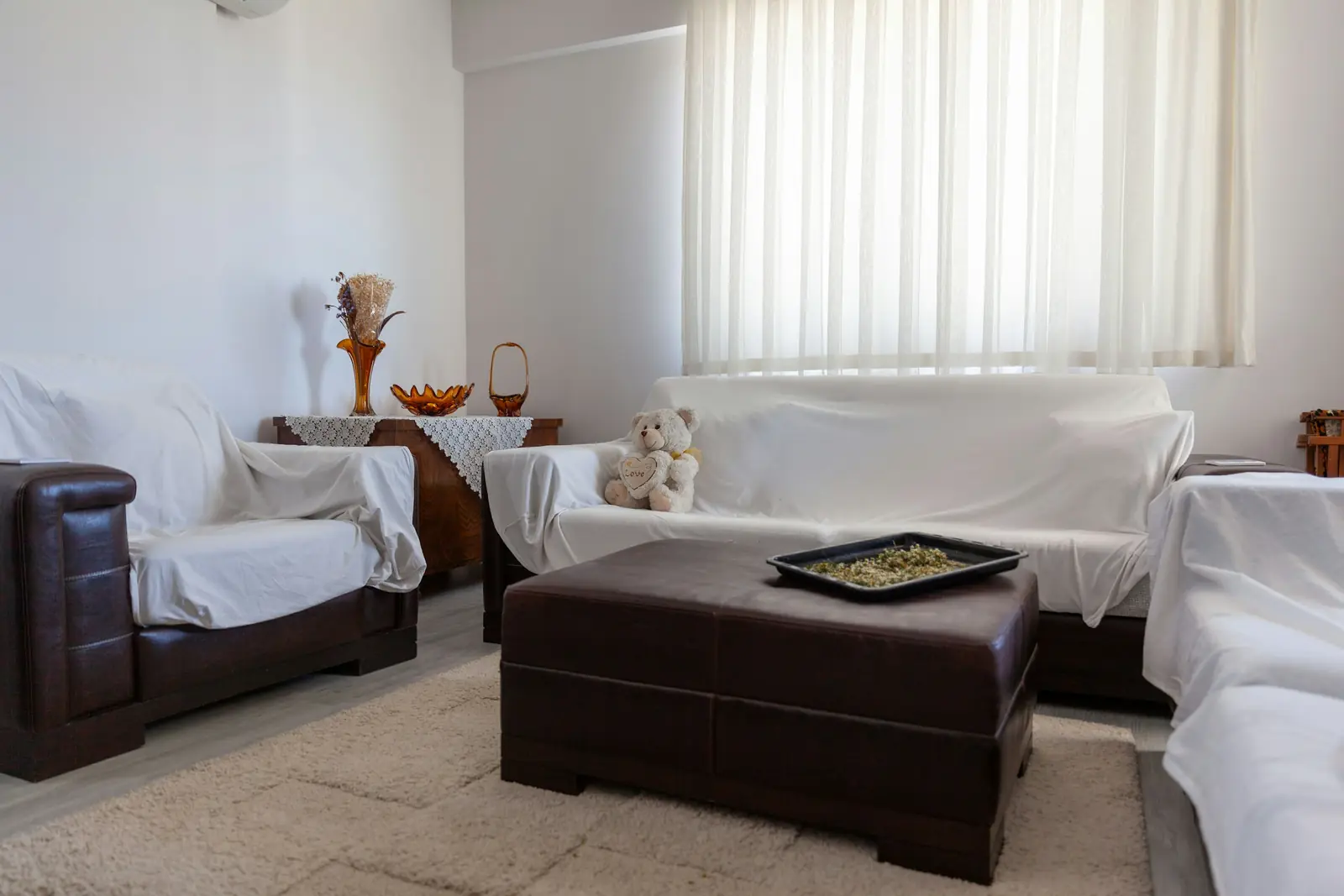
Choose fabric for your climate and your life
Indian homes demand practical fabrics. Look at the Martindale rub count: 30,000 rubs is fine for occasional use, while 50,000 or more is better for a sofa used daily by children and pets. Performance weaves resist stains and can be spot-cleaned with water. Bouclé and velvet feel luxurious and are surprisingly durable when they are of good quality, but avoid loosely woven fabrics if you have cats.
Colour matters too. Warm neutrals such as oat, sand and ivory hide everyday wear better than stark white, and they work with the strong sunlight most Indian homes enjoy. If you love colour, consider deep green, rust or ink blue — they age gracefully and pair beautifully with wood.
Three-seater, L-shape or modular?
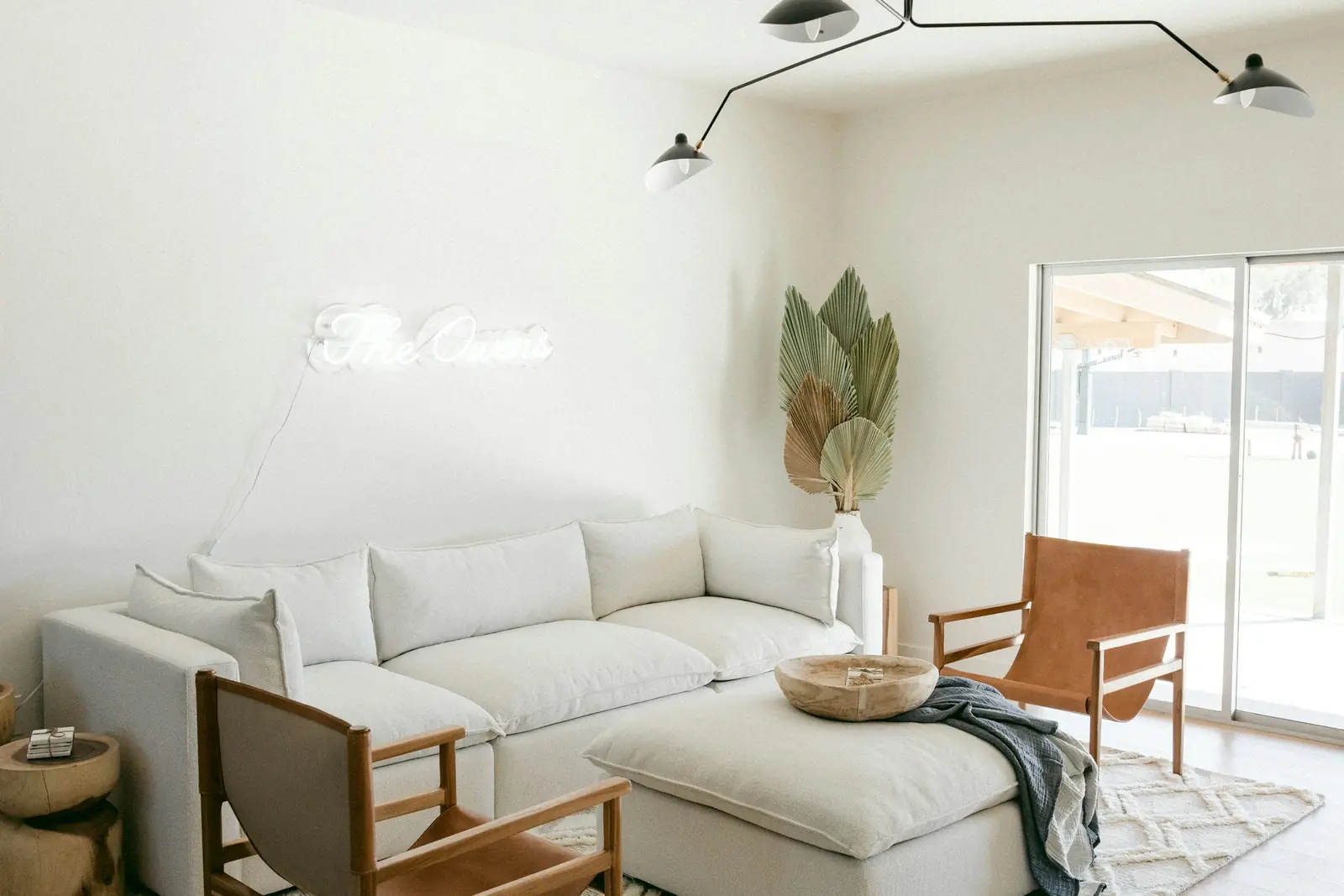
An L-shaped sofa seats more people in the same footprint and defines an open-plan living area, but it fixes your layout. A three-seater with two lounge chairs is more flexible and often easier to deliver. Modular sofas give you both: start as a three-seater and add a corner or chaise when you move to a bigger home.
Your sofa checklist
- Tape the footprint on the floor and check every doorway on the delivery route
- Sit on it for at least five minutes — or ask for a fabric and foam sample kit
- Confirm the frame is kiln-dried solid wood
- Check removable or washable cushion covers
- Ask about the warranty on frame, springs and upholstery separately
A well-made sofa should comfortably last fifteen years or more and can be reupholstered when you are ready for a change. Spend on the frame and the foam; you can always update the fabric later. And if you are unsure, book a free consultation — our designers can bring swatches and a 3D layout to your home.